

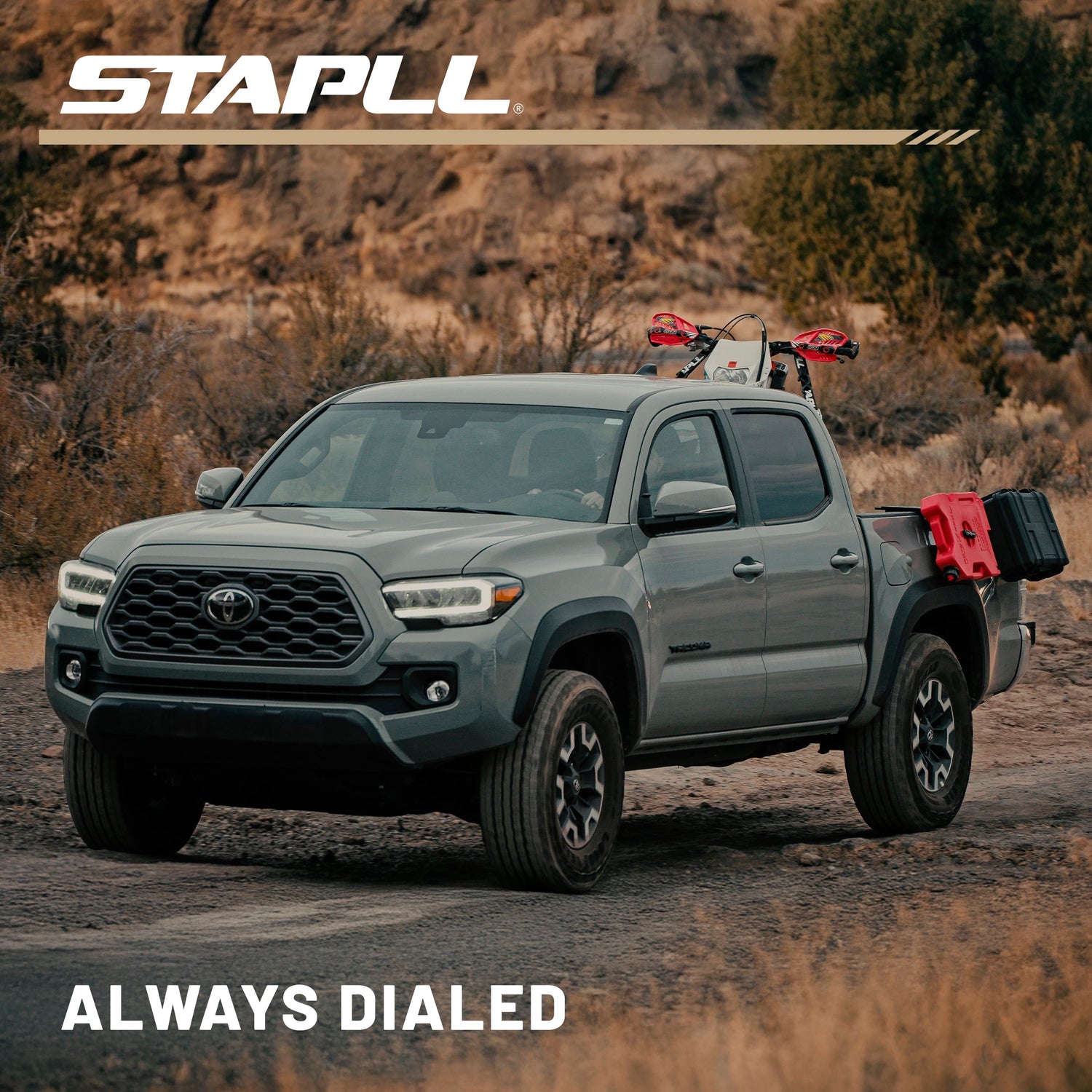
The question comes up about ten times a day in our inbox: "Can I add storage to my truck without drilling holes in it?"
The short answer is yes — and STAPLL Fender Racks are designed specifically for it. But the longer answer is worth explaining, because most truck owners don't actually know what they're protecting their truck from when they refuse to drill into it. They just have a gut feeling that drilling is bad, and that feeling is correct. This guide walks through why no-drill matters, how STAPLL's no-drill system actually works, and the step-by-step install process — so you know exactly what you're getting into before you order.
Why "No-Drill" Actually Matters
If you've paid $40,000 to $90,000 for a new truck in the last few years, your instinct to not drill into it is right — but the reasons go deeper than aesthetics. Here's what drilling into a modern truck actually costs you:
1. Corrosion Risk in Aluminum-Body Trucks
The 2015+ Ford F-150 has an all-aluminum body and bed. Every Ford Super Duty (F-250, F-350) from 2017 onward uses aluminum body panels too. Drilling into aluminum without proper sealing creates a path for water and salt to penetrate the protective oxide layer. The result, over a few seasons, is galvanic corrosion around every drill point — visible as white powdery deposits or worse, structural pitting. Once it starts, it spreads.
This isn't theoretical. The aftermarket industry has had to redesign half their products in the last decade specifically because of aluminum body corrosion claims.
2. Warranty Implications
Most truck manufacturers don't void the entire warranty over a drill hole, but they will deny warranty claims for issues caused by the modification. Drilled bed bolts shake loose and crack the bed? Not covered. Drill point starts to rust and the corrosion spreads to the rest of the panel? Not covered. The manufacturer's position is consistent: any failure linked to a non-factory hole becomes the owner's problem.
3. Resale Value
The used truck market in 2026 rewards "factory clean" condition. A truck with visible aftermarket drill holes — even sealed and painted — sells for less than the same truck without them. The price gap can be $1,000–$3,000 on a half-ton, more on a heavy-duty. CarMax, dealers, and private buyers all penalize modifications they didn't choose. Even removable aftermarket items leave bolt-hole evidence behind.
4. Lease Compliance
If you lease your truck, drilling is usually a contract violation. Lease return inspections specifically flag bolt holes, aftermarket mounts, and bed-rail modifications. Charges range from $200 per hole to "buy the truck" depending on severity.
5. The Truck Was Engineered Without Those Holes
Modern truck beds are stress-engineered for specific load paths. Drilling into a bed rail or fender introduces stress concentrations the engineers didn't account for. Most of the time this doesn't cause a problem — but on heavily-loaded trucks (camper rigs, work trucks hauling near payload capacity), drilled holes have been known to develop cracks over time.
Add it all up and the "I don't want to drill into my truck" instinct is rational, defensible, and worth thousands of dollars over the life of the vehicle. The good news: you don't have to.
The Three Common Ways Truck Owners Try to Avoid Drilling
Before getting into how STAPLL solves it, here's the honest landscape of no-drill options out there:
1. Bed Rail Clamp Systems (Many Brands)
Some bed rack and crossbar systems use clamps that grip the inside lip of the factory bed rail. Pros: legitimately no-drill. Cons: clamp quality varies wildly, most rack systems still cost $640–$1,500+, and they generally span ACROSS the bed — meaning they consume vertical bed space.
2. Accessory Track Mounting (Newer Trucks)
Some modern trucks ship with factory accessory tracks built into the bed rail (Ford F-150 Tremor, Toyota Tundra with deck rail system, Ram 1500 with cargo rail system). These tracks accept T-slot bolts for mounting accessories. Pros: clean, no-drill, factory-integrated. Cons: only available on specific trim levels, and most accessories that mount to tracks are still bed-mounted (taking up bed space).
3. Magnetic or Suction Mounts
A few products try magnetic mounting for accessories. Honest answer: these don't hold serious weight reliably, and aluminum-body trucks reject magnets entirely (magnets only stick to steel).
4. STAPLL's Patent-Pending No-Drill System
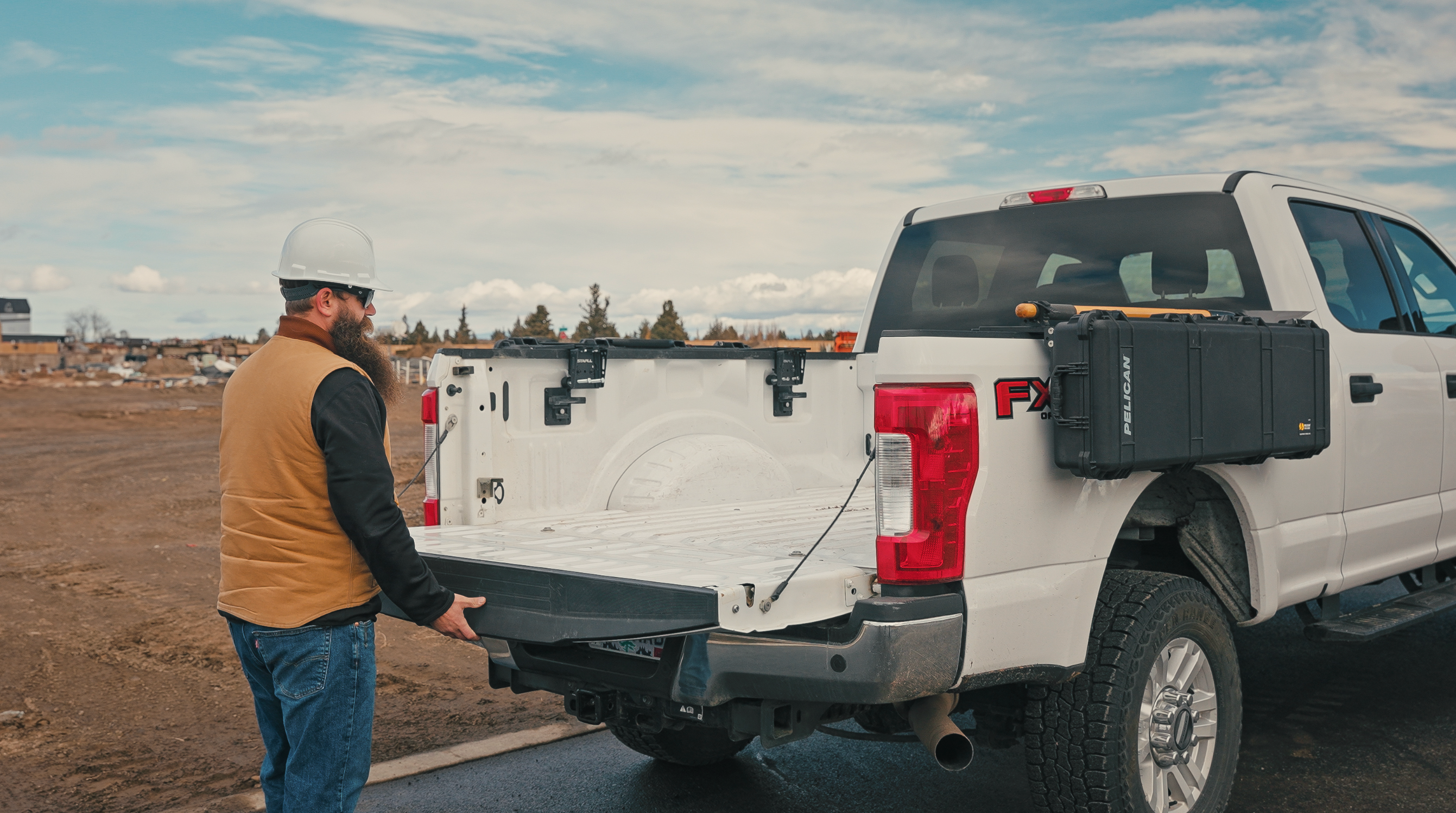
This is where STAPLL Fender Racks come in. Built specifically as a no-drill mounting system that works on virtually every modern truck — and crucially, it mounts to the FENDER (side of the bed) rather than spanning across the bed, so you keep all your cargo space.
How STAPLL's No-Drill System Actually Works
The technical bit, because most blogs gloss over this. STAPLL's MTMS (Modular Truck-Rail Mounting System) is a patent-pending bracket designed to attach to your truck in one of two ways — and every Fender Rack ships with both hardware kits in the box. Whichever fits your truck, you use.
Track Hardware Kit
For trucks with factory accessory tracks built into the bed rail. The Track Hardware Kit uses T-slot bolts that slide into your existing track. You position the bracket where you want it, slide the bolts into place, and tighten. The bracket is now locked to your truck's factory mounting point — engineered for accessory loads — with zero modification.
Compatible trucks (track systems):
- Ford F-150 with bed accessory tracks (most modern trims)
- Ford Super Duty with Boxlink tie-down system
- Ram 1500/2500/3500 with Rambox or cargo rail system
- Toyota Tundra with deck rail system
- Toyota Tacoma with bed rail tie-down system
- Jeep Gladiator with Trail Rail system
- Chevy Silverado and GMC Sierra with cargo bed accessory tracks (current generation)
Clamp Hardware Kit
For trucks without factory accessory tracks. The Clamp Hardware Kit uses a custom-designed clamp that grips the underside of the bed rail lip. Stability bolts create tensile equilibrium (balanced opposing forces) that lock the clamp in place — countering external weight and movement forces. The clamp is designed for the geometry of standard pickup bed rails and is engineered to handle the rated load without slipping.
Compatible trucks (clamp system):
- Ford F-150/F-250/F-350 without accessory tracks
- Ram 1500/2500/3500 without Rambox or cargo rail
- Chevrolet Silverado / GMC Sierra without accessory tracks
- Older trucks (back to ~2004) with standard bed rail geometry
Why Both Kits Are Included
This used to be a customer pain point — figuring out whether your specific truck/trim needed Track or Clamp hardware. Now every STAPLL Fender Rack ships with both kits in the box. You install whichever fits. If you sell the truck and buy a different one, the same rack works on the new truck — just swap to the other kit.
The 5-Step Install Process
Real talk: installing a STAPLL Fender Rack takes 30–90 minutes the first time, depending on whether you're using Track or Clamp hardware and how careful you are with positioning. Most customers do it in their driveway with hand tools — no shop visit required.
Step 1: Decide Track vs Clamp
Look at your truck's bed rail. If there's a factory T-slot accessory track running along the top of the bed rail (Ford F-150 with bed accessory tracks, Ram with cargo rail, Tundra with deck rail), you're using Track Hardware. If there's no track and just a standard bed rail lip, you're using Clamp Hardware. Both kits come in the box — you'll only use one.
Step 2: Position the Bracket
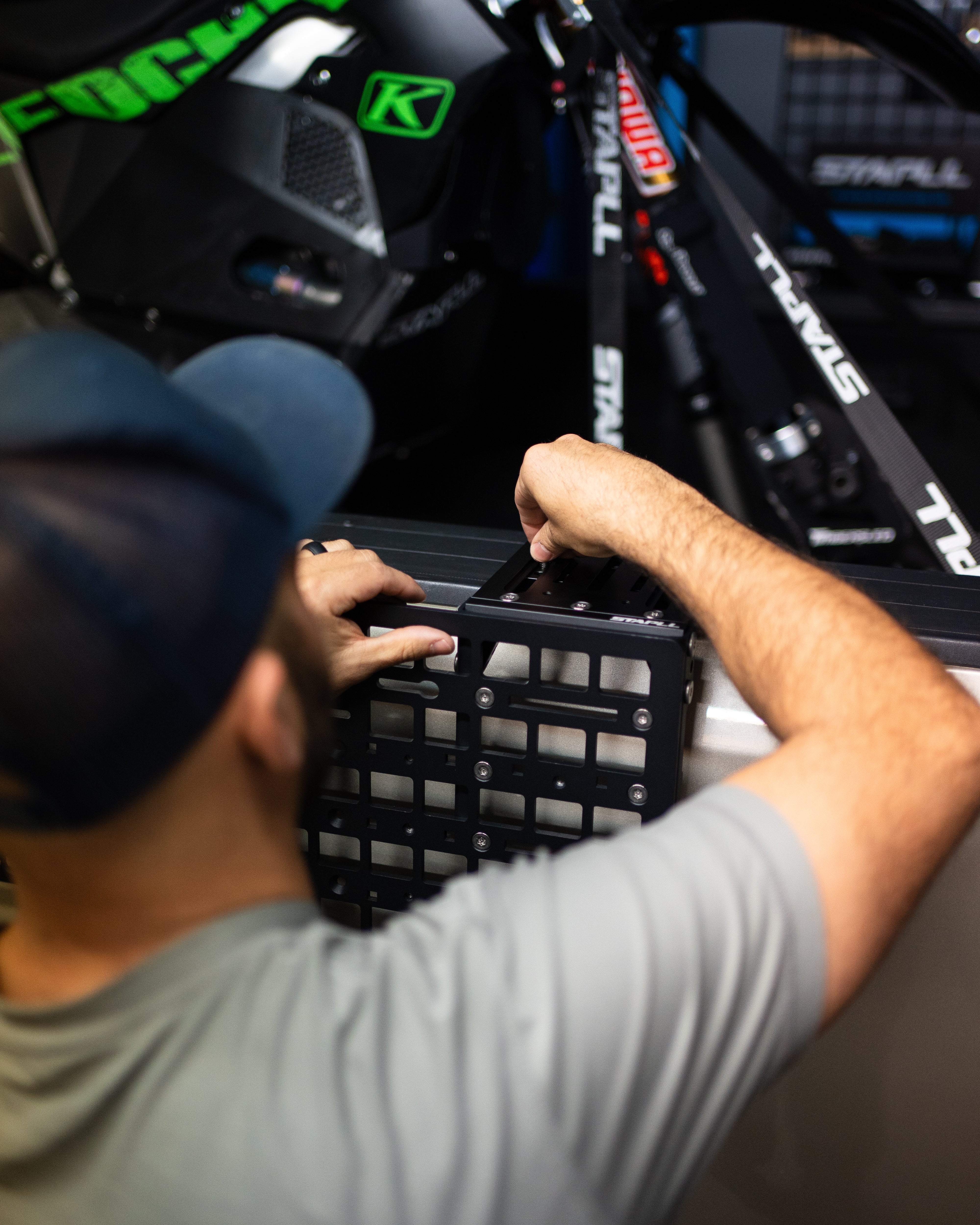
Hold the Fender Rack bracket against your fender where you want it mounted. The bracket sits along the outside of the bed rail, with the MOLLE panel or hard case hanging on the fender side. The minimum 1.75" bed protrusion requirement gives the bracket the leverage it needs to stay stable.
Step 3: Install the Hardware
For Track installs: slide the T-slot bolts into the track, position them under the bracket holes, and tighten the 18/8 stainless passivated bolts to spec. For Clamp installs: slide the clamp under the bed rail lip, hand-tighten the stability bolts, then torque to spec. Both setups include the Magnetic Rubber Spacer with 3M Paint Protection Film pre-applied — it sits between the bracket and your fender to prevent any contact-point scratching.
Step 4: Attach the Slide Plate & MOLLE Panel
The Slide Plate is a clever feature that lets you remove and reinstall your accessories (MOLLE panel, hard case) without taking apart the underlying bracket. You attach the Slide Plate to the Thread Plate via the 1/4"-20 stainless security screws, then slide your MOLLE panel or 56L Hard Case onto the plate.
Step 5: Test and Mirror
Check torque on all bolts, verify the bracket doesn't shift under hand pressure, and load test with whatever gear you plan to mount. Most customers then install the matching bracket on the other side of the truck.
That's it. No drill, no modifications, and if you ever want to remove it, the entire system bolts off in about 15 minutes. Your truck returns to factory.
Why This Mounts to the Fender (Not the Bed)
Worth a quick note on STAPLL's architectural choice. Unlike bed racks and crossbar systems that span across the top of the bed, STAPLL Fender Racks mount to the side of the bed — on the fender itself. This is the entire reason the system works for no-drill installs:
- The bed rail's structural geometry is ideal for clamp-style mounting — the underside lip is consistent across nearly every modern truck
- Mounting from the side leaves the bed completely open for cargo (lumber, sheet goods, camper, sleep platform, etc.)
- The lateral load path is short — the bracket sits right above the rear axle, where the truck handles weight best
- Loading and unloading happens at hip height, not above your head
Bed-spanning racks (Billie Bars, Yakima OverHaul, Leitner) have to engineer around the bed cargo. Underbody toolboxes have to drill through the frame. Hitch-mounted systems have to deal with weight distribution and rear visibility. Fender mounting sidesteps all of those constraints — and the no-drill install is part of why.
Real Builds — No-Drill Installs Across Every Major Truck Make
The fastest way to verify STAPLL works on YOUR truck is to look at customers who've done the install. A few standout no-drill builds:
2024 Ford F-150 — Build #74
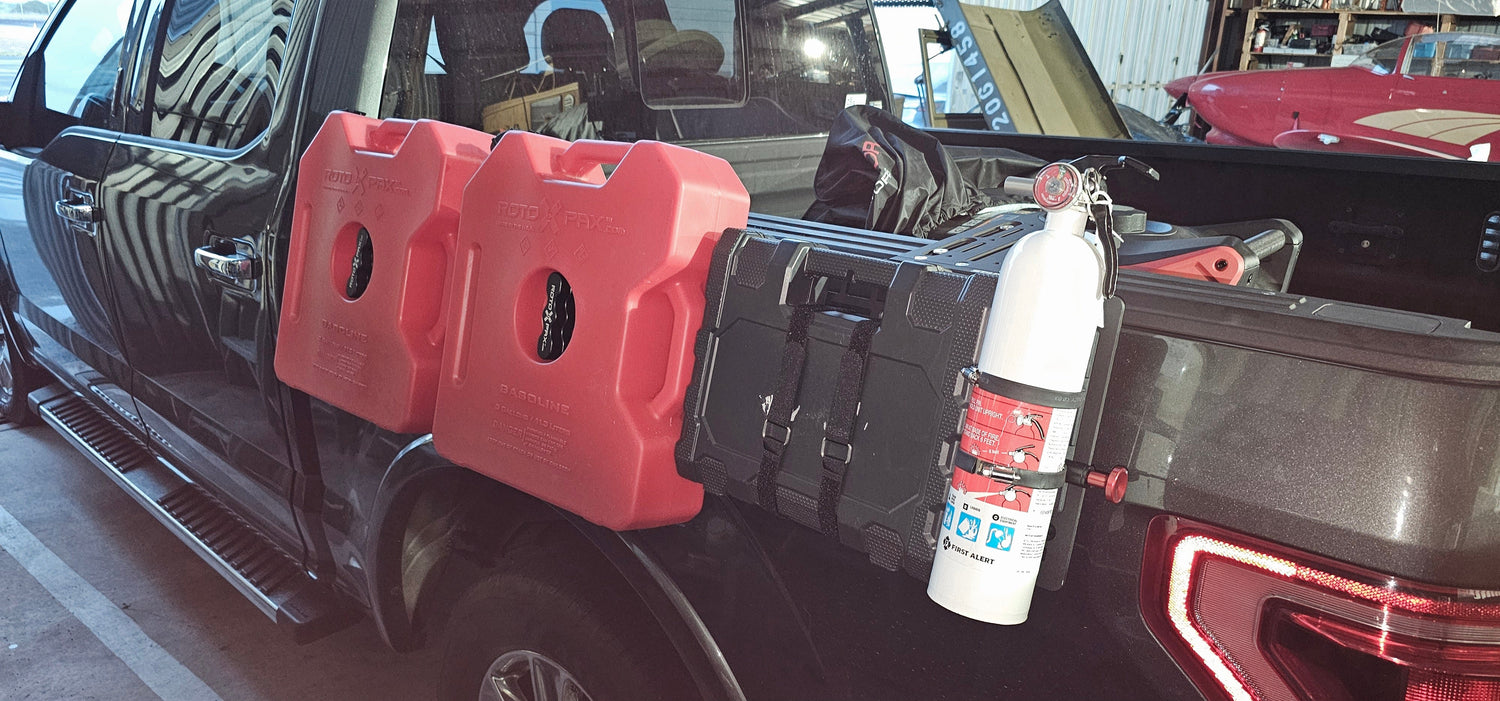
Aluminum-body F-150 — the truck where no-drill matters most. Clean install on factory bed rails with zero modification. See the build →
2019 F-150 Raptor — Build #43

The composite-fender Raptor — proof STAPLL works without modifying Ford's halo off-road truck. See the build →
2019 Ram Rebel — Build #82
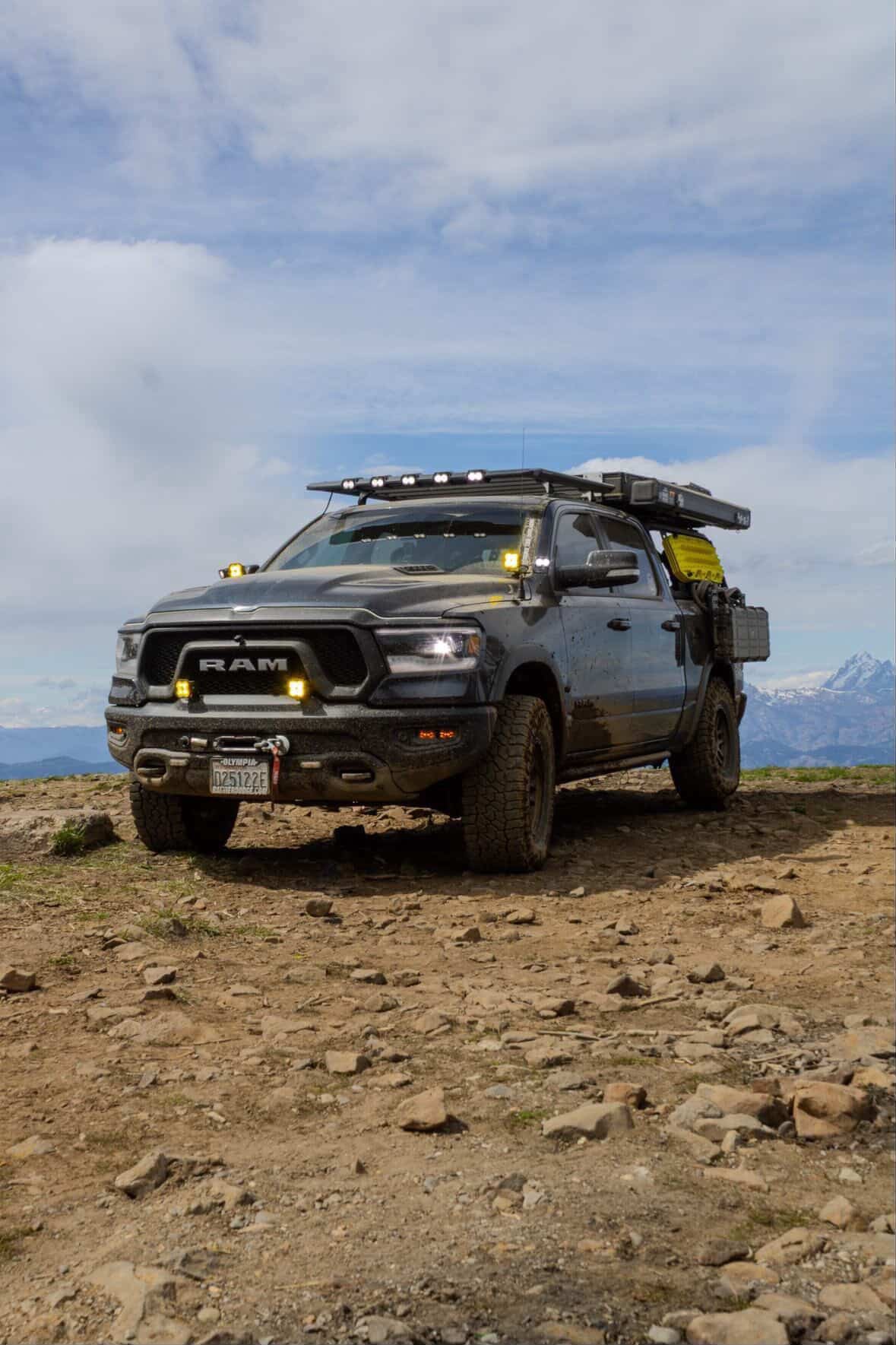
Full overland build with the 56L Fender Case Kit using Clamp Hardware — no drilling required despite mounting hundreds of pounds of gear. See the build →
Other No-Drill Builds Worth Studying
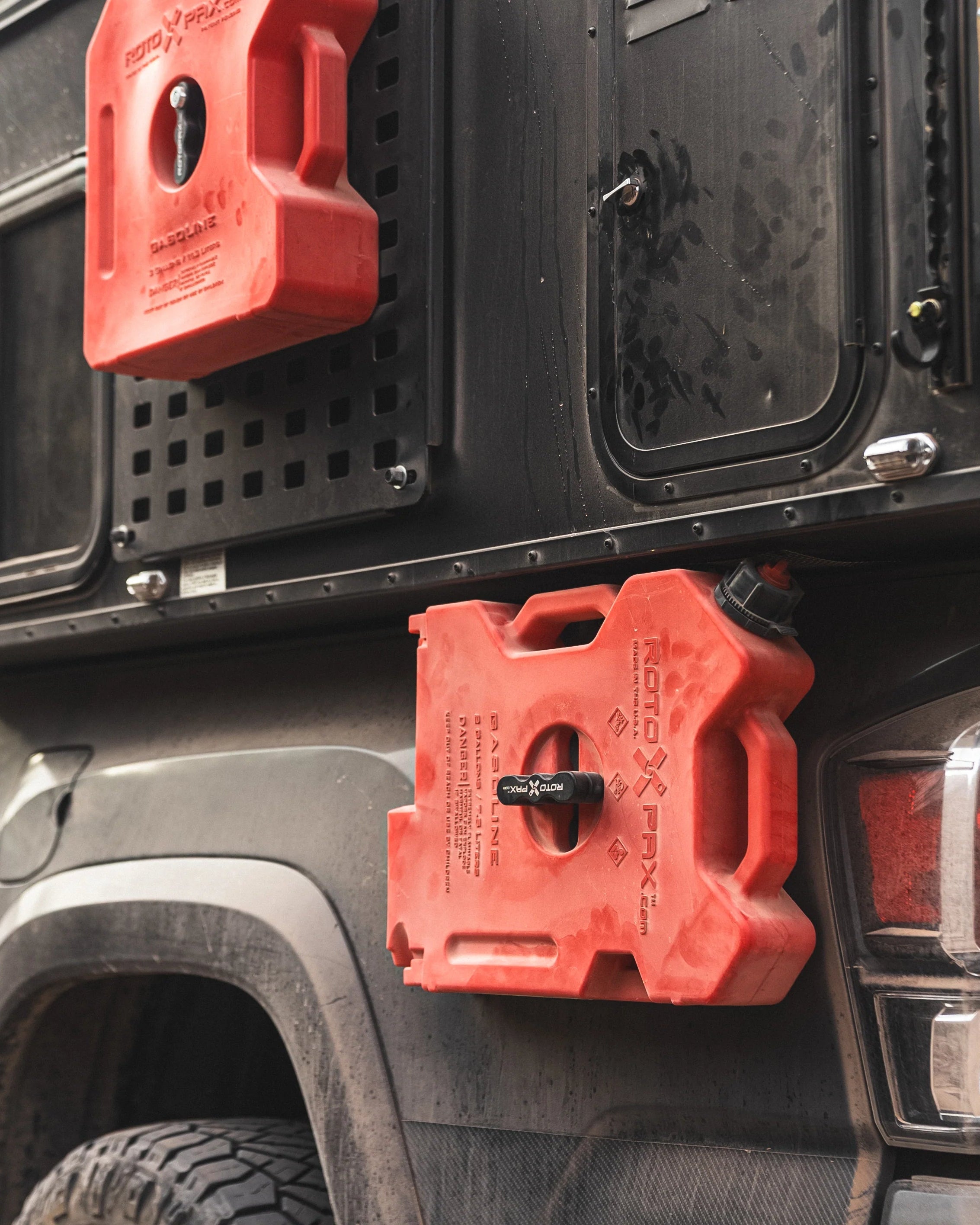
- 2024 Toyota Tacoma — Build #70 — Track install with RotopaX setup
- 2024 Chevy Silverado — Build #44 — Clamp install, daily-driver work truck
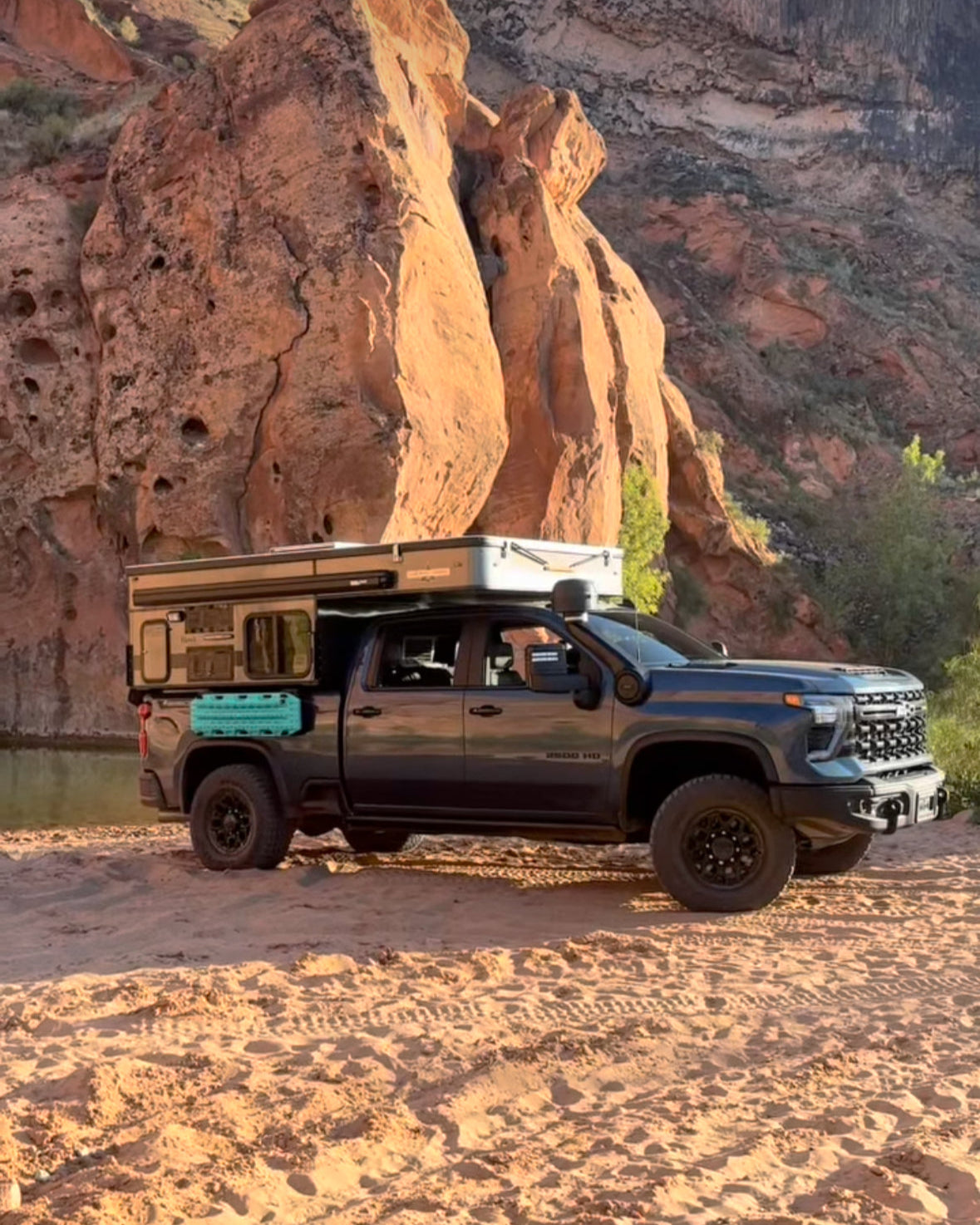
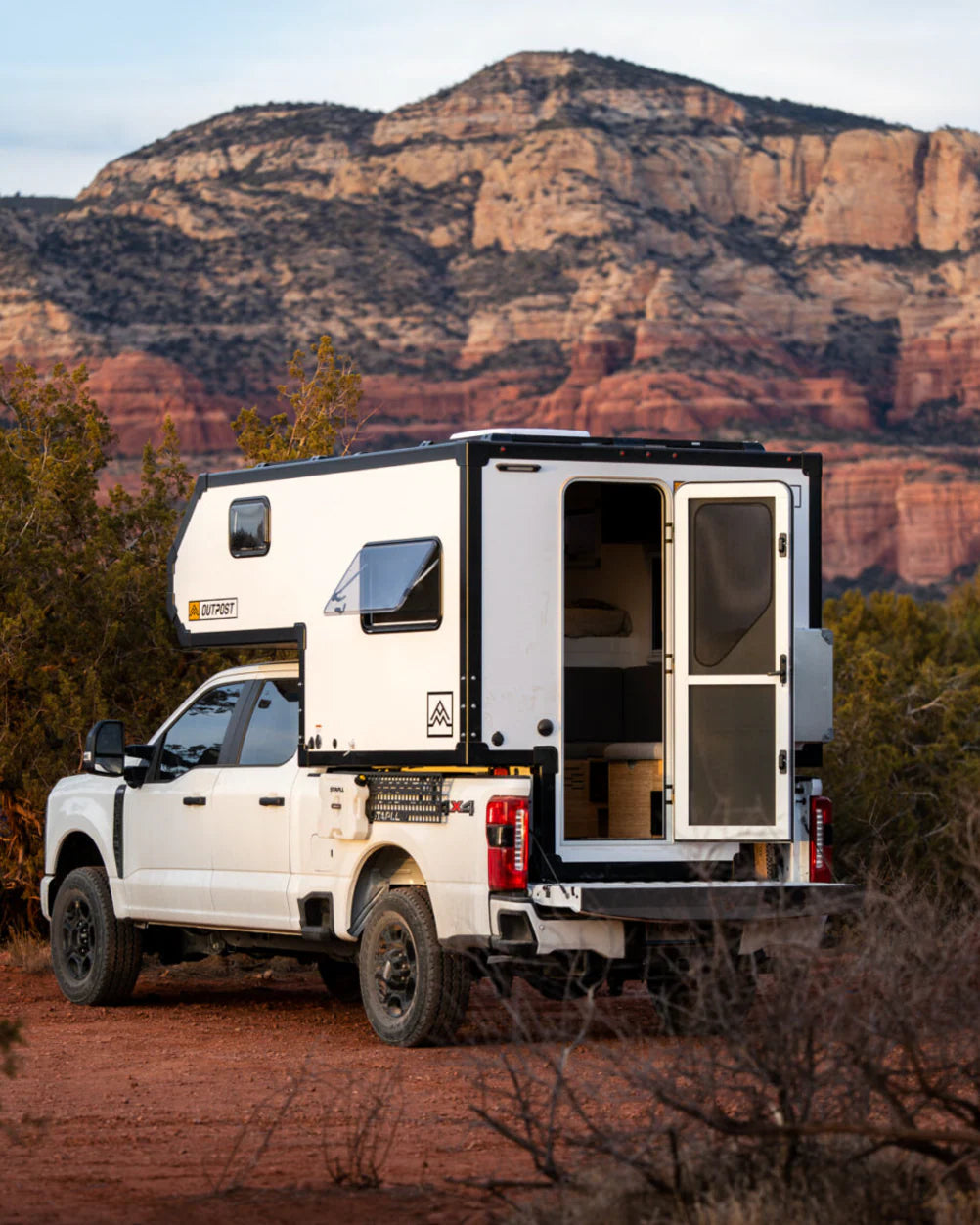
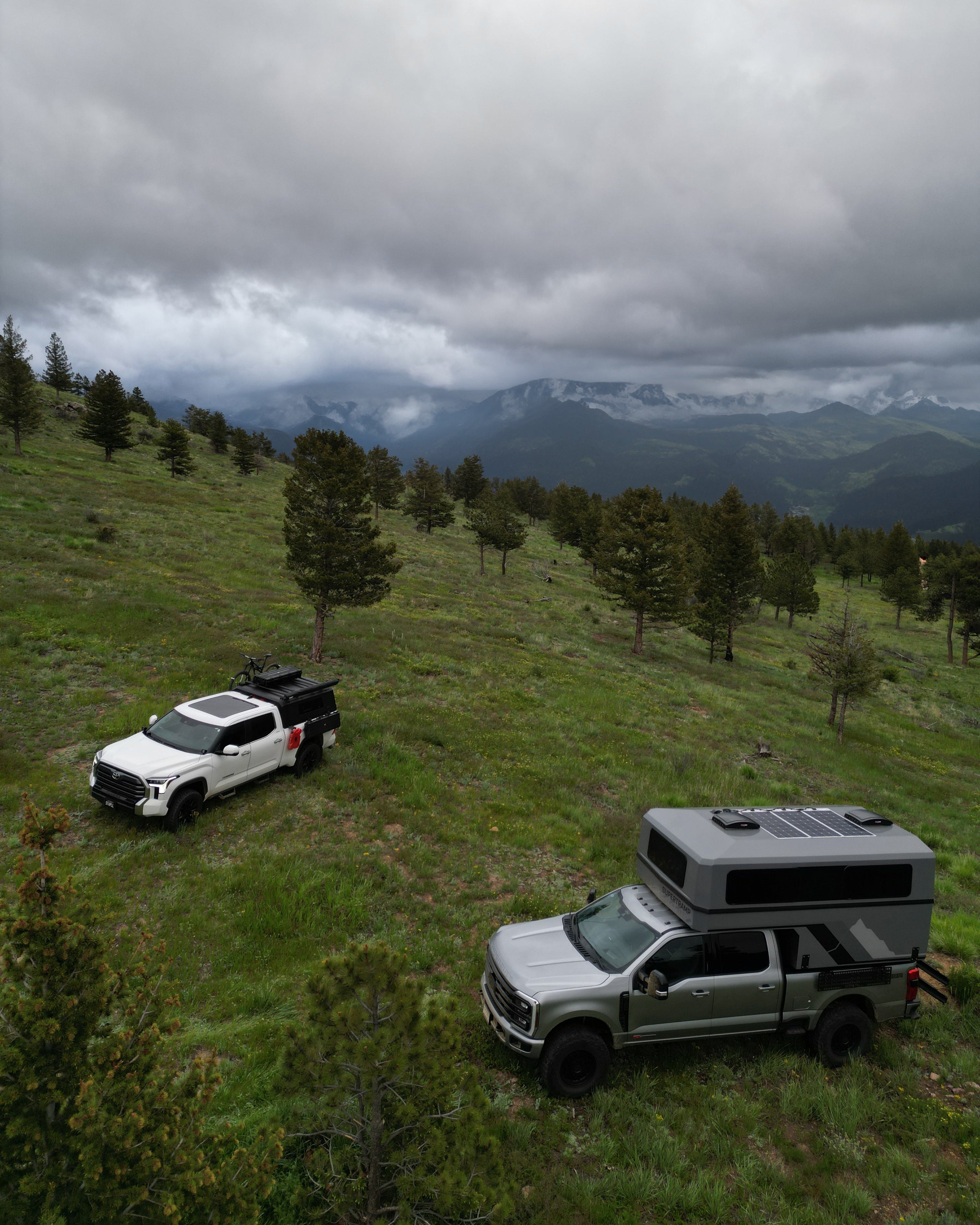
- 2026 Chevy 3500HD — Build #81 — Heavy-duty install with truck camper
- 2024 Toyota Tundra — Build #32 — Track install on a half-ton with camper
Browse the full Customer Builds gallery for examples across every major truck make.
What You Can Mount With No-Drill STAPLL Fender Racks
This is where the no-drill story gets fun. Once the bracket is on, the MOLLE panel and Slide Plate accept a remarkable range of accessories. A few highlights:
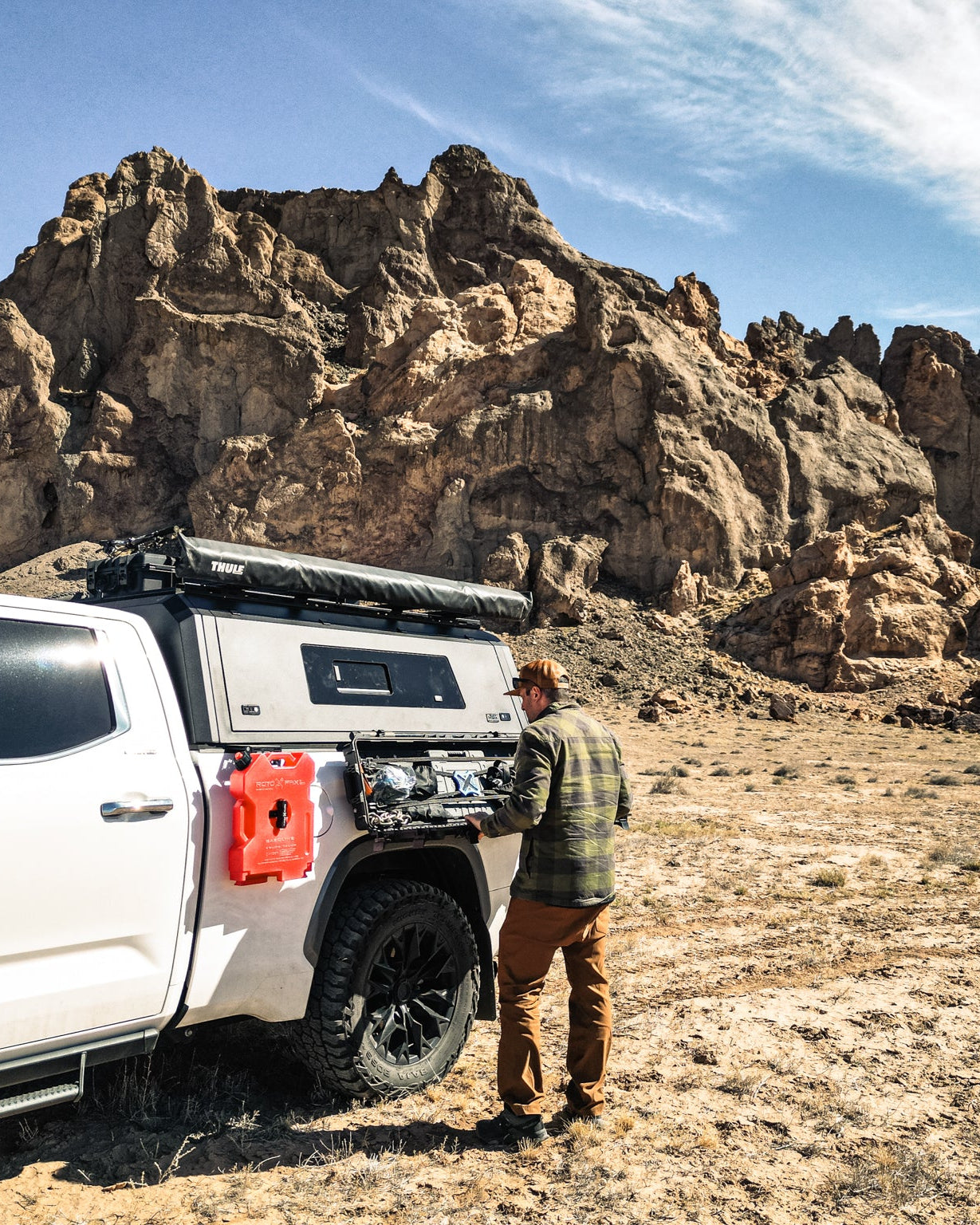
- Fuel cans — RotopaX 1, 2, or 4-gallon packs in gas, diesel, or water
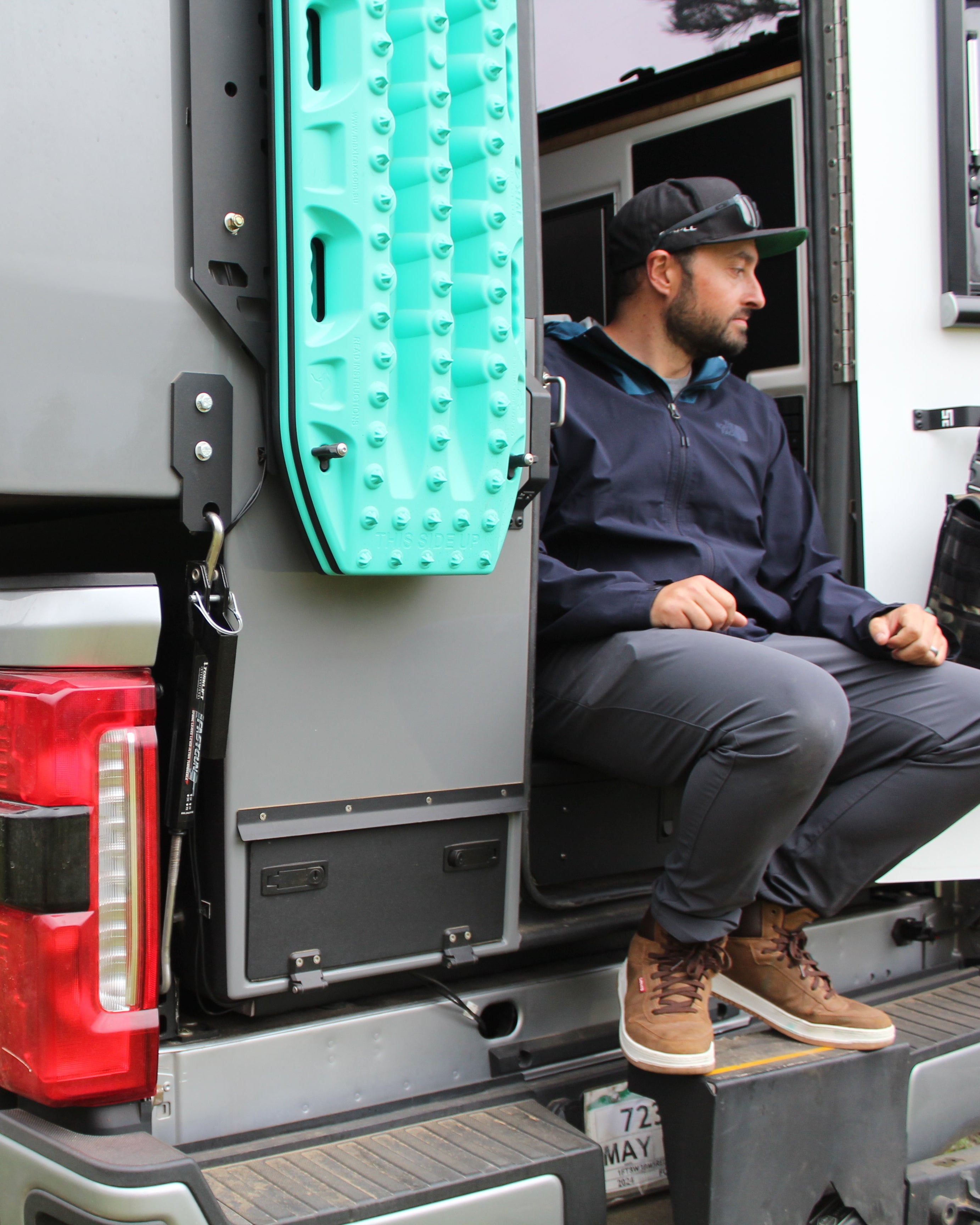
- Recovery boards — Maxtrax traction boards mount directly via MOLLE
- Tools — Quick Fist clamps for shovels, hatchets, axes, pry bars, sledgehammers
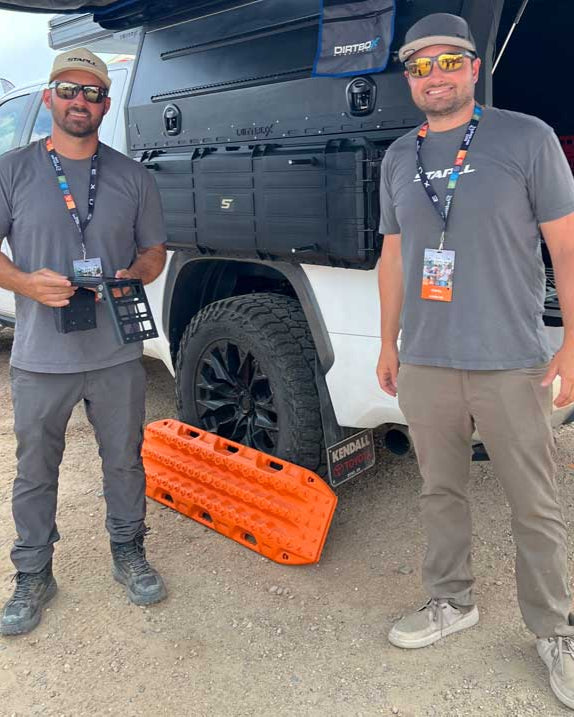
- Hard cases — STAPLL Small Hard Case or 56L Hard Case for lockable, weather-tight storage
- Bike racks — vertical mounts from RockyMounts or 1UP
- Shovels & recovery — DMOS shovels mount cleanly
- MOLLE pouches — any standard MOLLE-compatible pouch attaches directly
- Tack Strap and cargo control — straps and tie-downs integrate with the system
The whole point of the MOLLE-compatible mounting surface is that you can change what you carry without changing the rack. Fuel cans Monday through Friday for the work truck. Bikes on Saturday. Recovery boards for the trail ride Sunday. Same hardware, same no-drill install.
The STAPLL Fender Rack Lineup at a Glance
| Product | Price | Best For |
|---|---|---|
| 6x7" Fender Rack | $199.99 | Single accessory — one RotopaX or compact hard case |
| 6x13" Fender Rack | $249.99 | 1–2 RotopaX or Maxtrax. Sits lower for camper clearance. |
| 48x10" Fender Rack | $599.99 | Maximum versatility. Fuel + tools + recovery on one rack. |
| 56L Fender Case Kit | $649.99 | Best seller. Lockable, weather-tight 56L storage. |
| Capper Lift & Seal Kit | $149.99 | Required add-on for tonneau cover or capper installs. |
FAQs About No-Drill Installation
Will STAPLL fit my specific truck?
STAPLL is engineered to fit virtually every modern Ford, Ram, Chevrolet, GMC, Toyota, Nissan, and Jeep pickup. We back this with a universal fit guarantee — if it doesn't fit your truck, you get your money back. Try the Rack Recommender Tool to confirm fit for your specific year/make/model.
What if my truck has an aftermarket tonneau or capper?
Add the Capper Lift & Seal Kit ($149.99) for a weather-tight install under your cover. STAPLL works with most major tonneau brands (BAKFlip, Diamondback, Retrax, Truxedo, Extang, UnderCover) and capper brands (ARE, Leer, SnugTop).
Can I install it myself?
Yes. Most customers complete the install in 30–90 minutes using hand tools in their driveway. We have a full Install Video and Install Manual if you want to walk through it before ordering.
Does it scratch my truck?
Every Fender Rack includes a Magnetic Rubber Spacer with 3M Paint Protection Film (PPF) pre-applied. This sits between the bracket and your fender to prevent any contact-point scratching during install or use.
What about duallies?
Dually trucks (Ram 3500 DRW, F-350 DRW, Silverado/Sierra 3500 DRW) fit a single bracket per side around the rear wheel well. The 6x13" Fender Rack is the right pick — you can't span long items across the wheel arch on a dually.
What if I sell my truck and buy a new one?
The racks bolt off in 15 minutes — your old truck returns to factory. The same hardware works on virtually every modern truck make, so your STAPLL Fender Racks move with you to the next truck. Just swap to the other hardware kit (Track or Clamp) if needed.
The Bottom Line
Truck owners don't want to drill into their trucks for good reasons — corrosion risk on aluminum bodies, warranty issues, resale value, lease compliance, and engineering integrity. The "no-drill" instinct is rational and it's worth real money over the life of your truck.
STAPLL Fender Racks were designed specifically for this. Track Hardware for trucks with factory accessory rails, Clamp Hardware for trucks without — both included in every kit. Universal fit across every major pickup make. Install in under an hour with hand tools. Off in 15 minutes if you sell the truck.
Backed by our universal fit guarantee: if it doesn't fit your truck, we refund you. That's the no-drill promise.
How to Get Started
→ Use the Rack Recommender Tool — 5 questions, gives you the right rack recommendation for both sides of your truck.
→ Book a Free Build Consultation — 20 minutes with a STAPLL build expert. Walk through your truck, your gear, and your install questions.
→ Watch the Install Video — See the entire no-drill install start to finish before you order.
→ Shop All STAPLL Fender Racks
STAPLL Fender Racks are designed and engineered in Durango, Colorado. Every rack includes stainless steel mounting hardware, ships in 24–72 hours, and is backed by the STAPLL universal fit guarantee. Patented no-drill mounting system. Winner of Truck Camper Magazine Readers' Choice — Best Innovation 2025. Built for life on the road.

Leave a comment
All comments are moderated before being published.
This site is protected by hCaptcha and the hCaptcha Privacy Policy and Terms of Service apply.