

Will it fit my truck?
Almost certainly. The MTMS™ bracket is engineered to fit virtually every truck on the market — no drilling, no model-specific parts. Here's exactly how, and how to confirm yours in about a minute.
Built to fit virtually every truck.
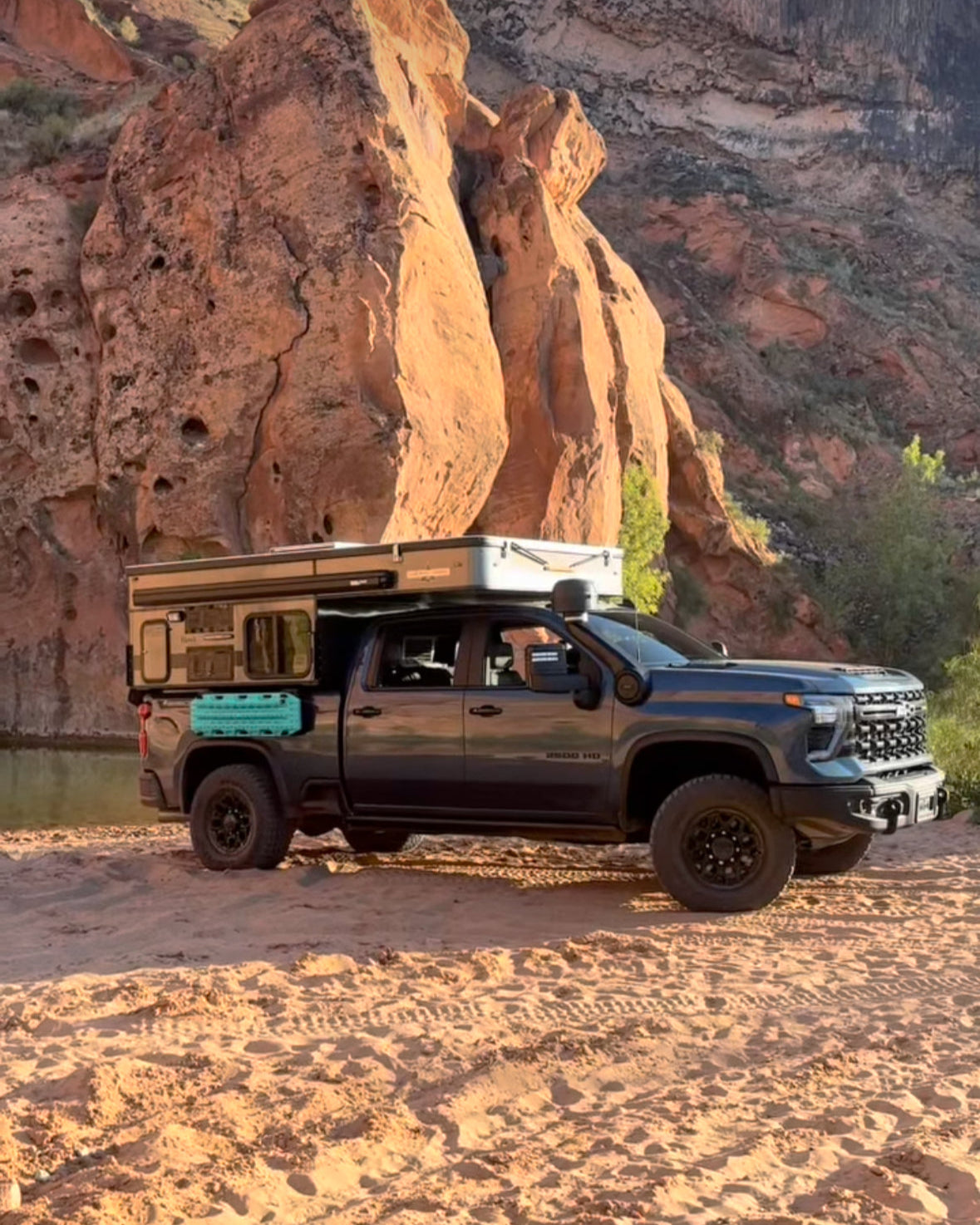
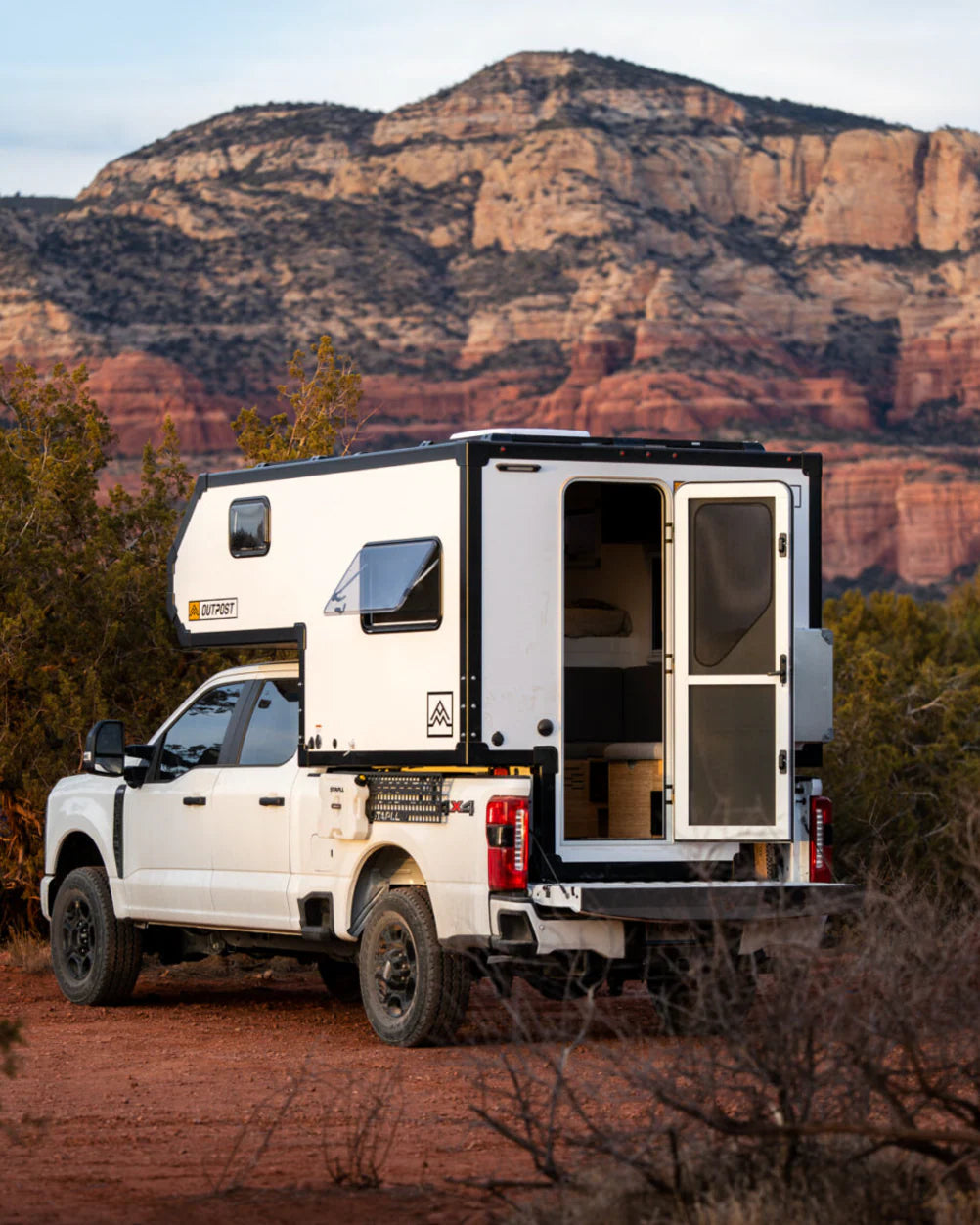
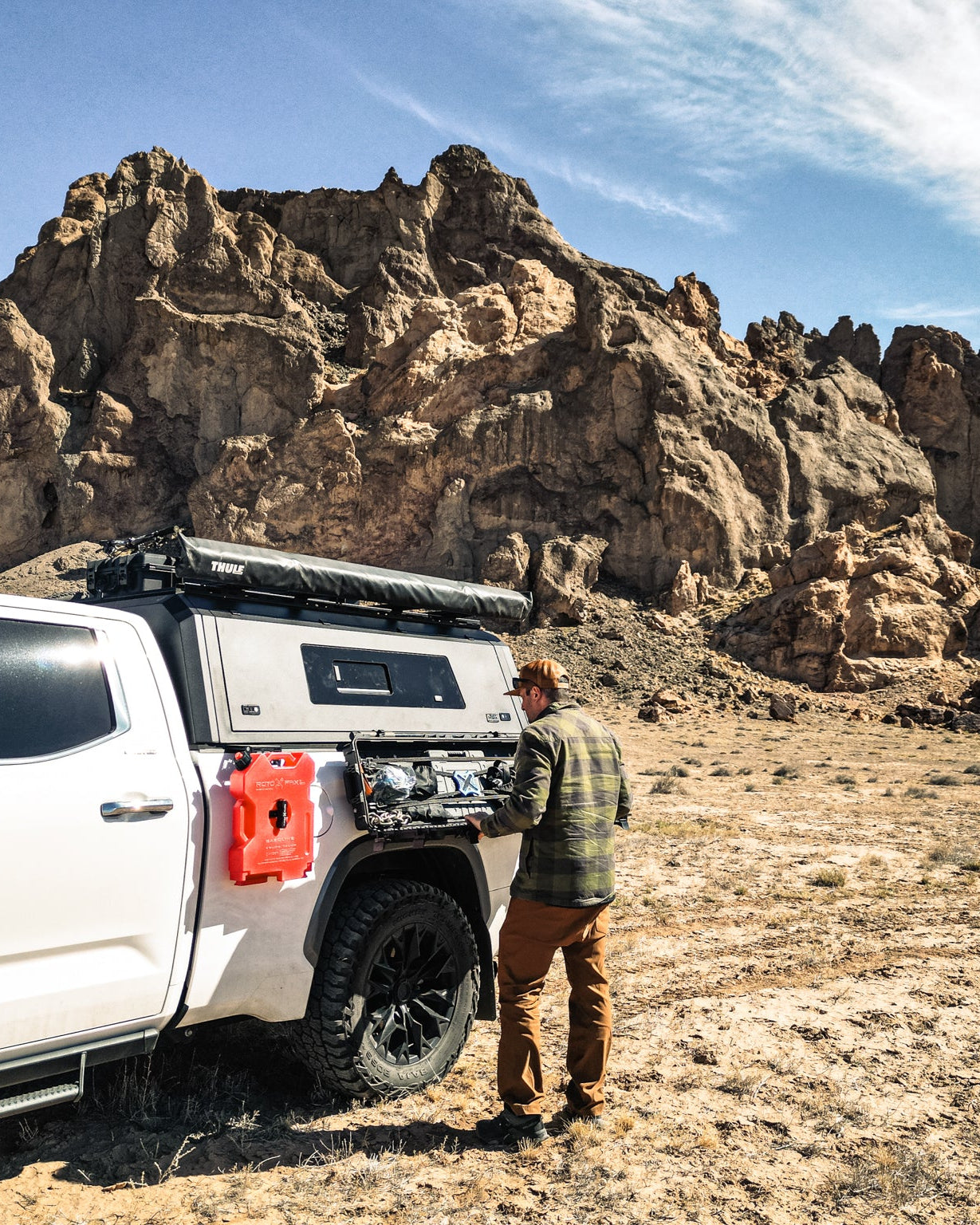
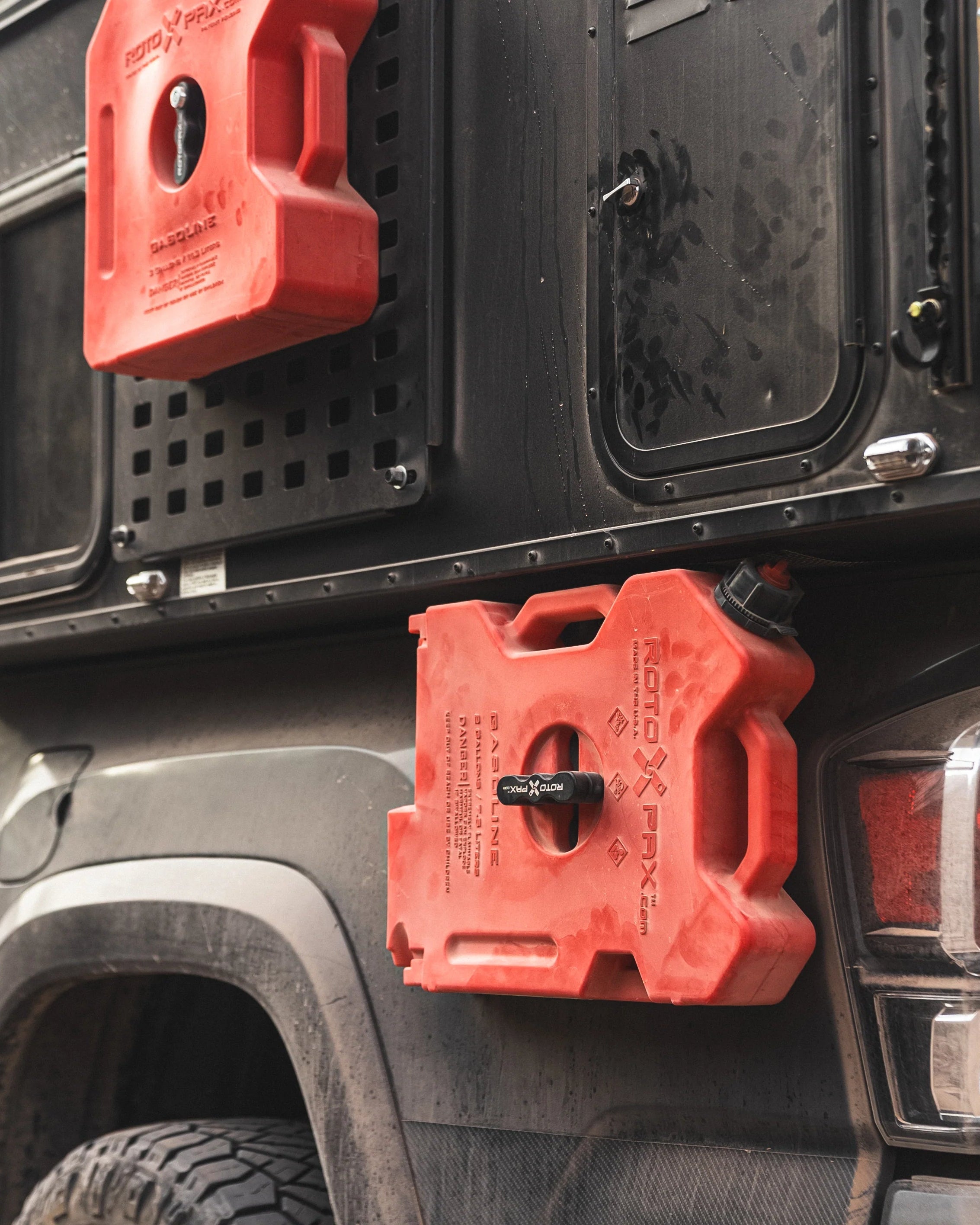
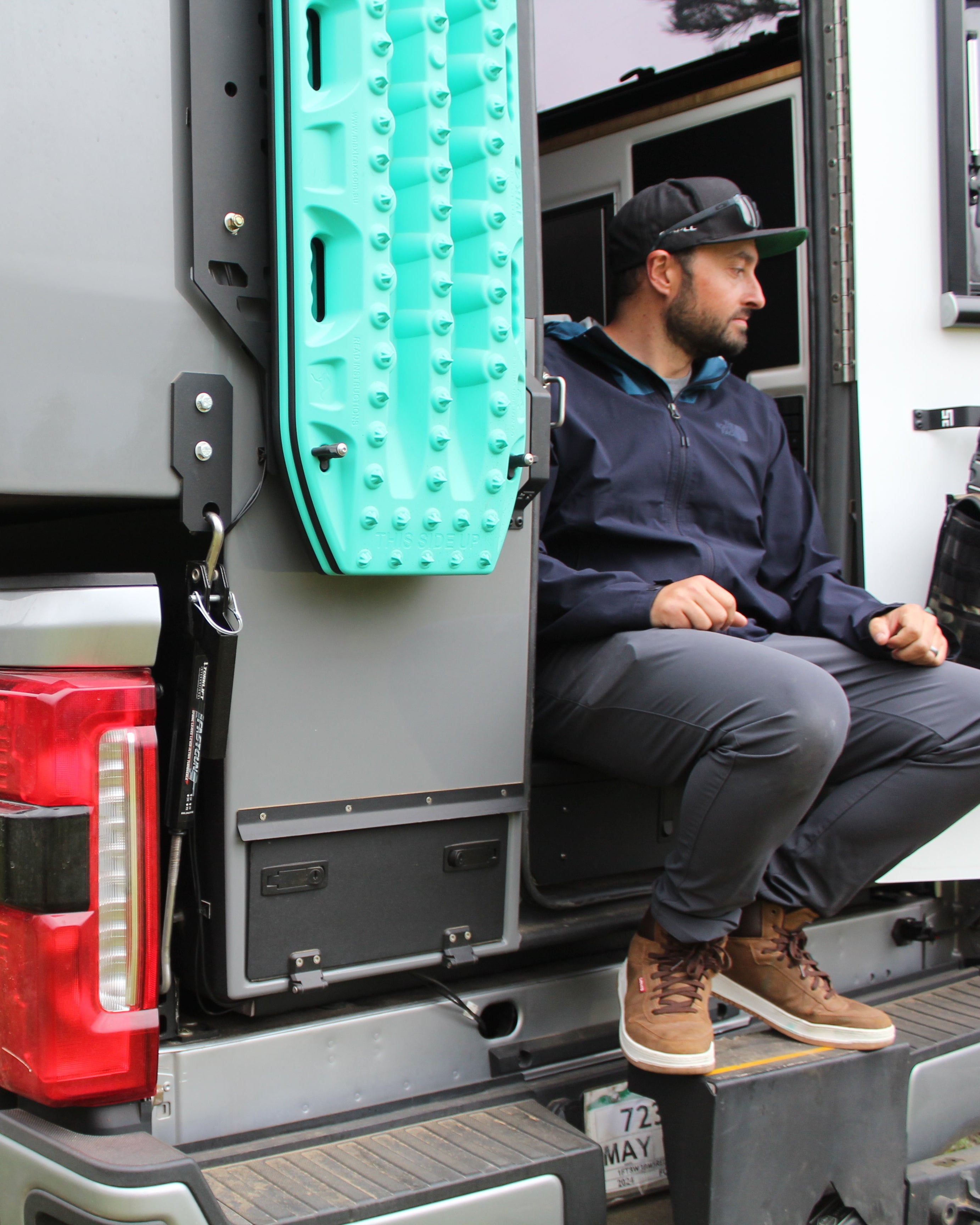
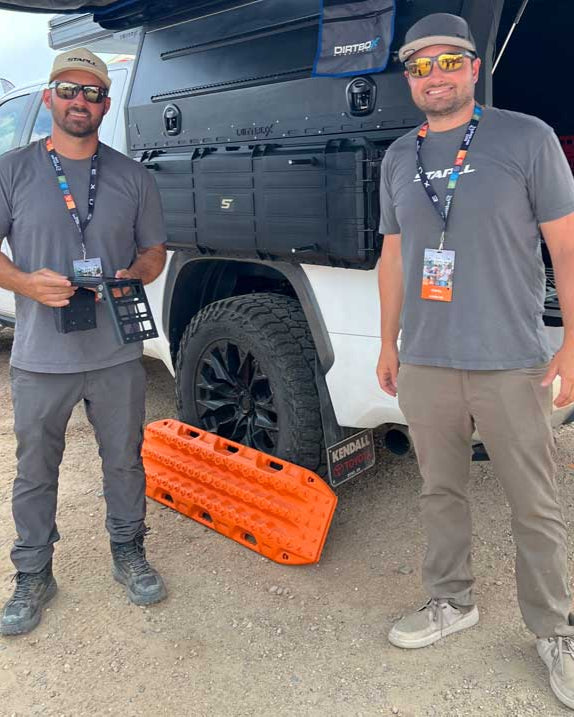
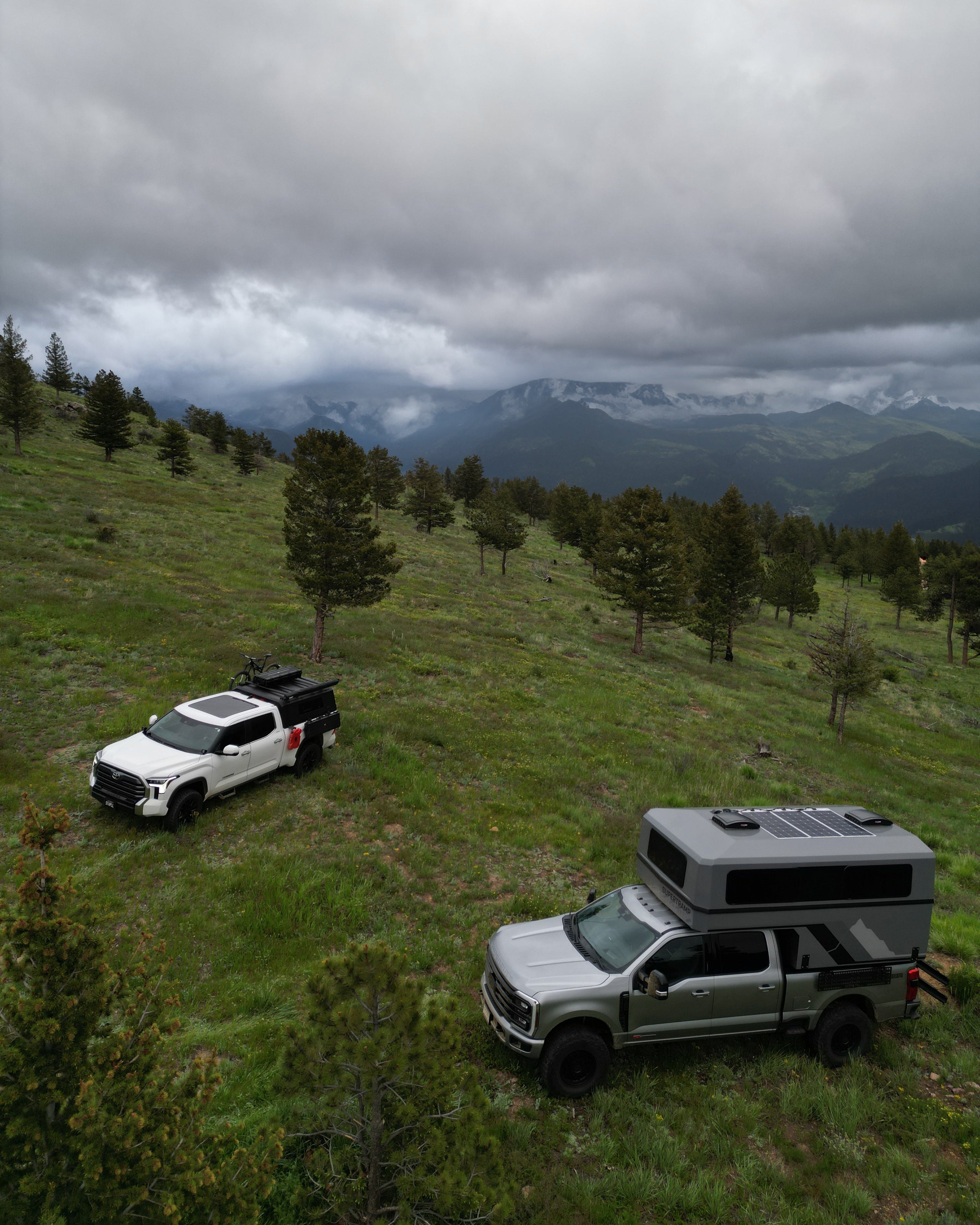
The Fender Rack mounts to standard bed rails or factory accessory track systems, so it's compatible with Ford, Ram, Chevy, GMC, Toyota, Nissan, and Jeep — no drilling, no hassle, and no model-specific parts to hunt down.
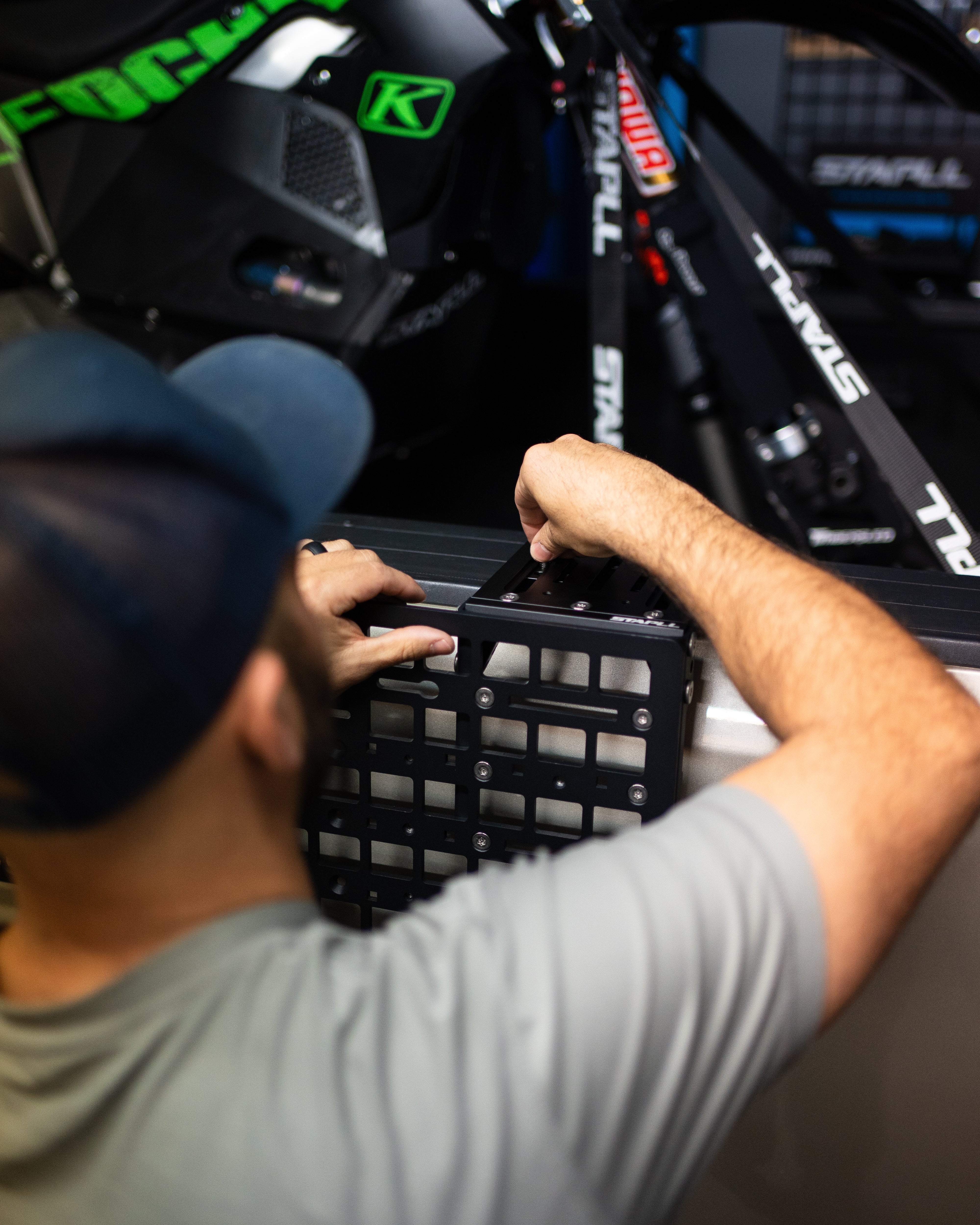
"Universal" usually means "fits nothing well." Ours is different: the dovetail micro-adjustment lets each bracket dial in to your exact bed rail, so a universal bracket lands like a custom fit. That's the part that took years to engineer.

Two hardware kits. Every truck covered.
Every rack ships with both hardware kits, so you're covered no matter which your truck uses. You don't have to choose at checkout — just use the one that matches your bed.

Clamp Hardware


Track Hardware

Adjustability & modularity.
The Fender Rack isn't a bracket — it's a system that adapts to your truck and your gear.
- Thread plate adjustment — 4 positions across a 1.8″ range (16mm resolution).
- Slide plate adjustment — 4.5″ of sliding range for fine customization.
- Hanger positions — mount vertical or at 20° to follow the line of your fender.
- Track mounting — the brace accepts a 1″ channel position range.
- Bed intrusion — reaches just 1.75″ into the bed in Position 1 (clears most bed campers), adjustable to 3⅝″.
- Above the rail — the bracket only stacks 0.55″ on top of the bed rail.


Two ways to reconfigure it.
Low-profile assembly
Running a capper or another bed accessory and need to sit lower? The Hanger can come off the Slide Plate and bolt directly to the Thread Plate.
- Standard assembly — 14mm thick (Slide Plate + Thread Plate)
- Low-profile — 9.5mm thick (Hanger direct to Thread Plate)

Expanded interior option
Want more storage? Add an extra Hanger to the inside of your Thread Plate and mount MOLLE panels within the bed itself.
- More storage — secure tools, recovery gear, and accessories inside the bed.
- Seamless integration — the extra Hanger pairs with your existing Thread Plate.
- Customizable placement — position it to suit your gear without giving up bed function.

The magnetic rubber spacer.
Metal on paint is how a rack ruins a truck. It never happens here — a magnetic rubber spacer and a layer of paint protection film sit between your fender and the bracket, so the two never touch.
- Nothing touches your paint. The spacer takes the contact, not the finish.
- It kills vibration. The rubber damps the buzz and chatter of washboard roads before it reaches the panel.
- It's magnetic. It stays exactly where you place it during install instead of sliding around while you line up the bracket.
- It comes off clean. No drilling means no holes — and the spacer and film peel away with zero residue if you ever pull the rack off or sell the truck.

Which hardware do you need?
This is the single thing people get wrong most often. What you need depends entirely on how your cover meets the bed rail — and the two kits are not interchangeable.
| Your setup | What you need | Why |
|---|---|---|
| Open bed | Nothing extra | The rack mounts straight to the bed rail. |
| Truck camper | Nothing extra | A camper sits in the bed — there's nothing on the rail to lift or seal. |
| Tonneau — sits on the bed rail | Capper Lift & Seal Kit | The rack passes beneath the cover. The kit lifts it just enough to clear the bracket and seals the gap. |
| Tonneau — exterior T-slot | T-Slot Hardware Kit | The cover still sits on the rail, but its T-slot track is built for mounting — so we bolt straight into it and you bypass the Lift & Seal entirely. |
| Tonneau — rails inside the bed rail, no T-slot | Let's talk | The one setup we can't bolt to as-is — those rails sit where we mount. There's almost always a workaround. |
| Capper / topper | Capper Lift & Seal Kit | A capper always rests on the bed rail, so it always needs the lift and the seal. |
| Capper — lip wraps outside the rail | Lift & Seal Kit + a notch | The lip sits where the bracket clamps, so it's cut and notched at the two mounting points. Common on A.R.E., Leer, SnugTop and Ventura. How it works → |
Capper Lift & Seal Kit
For a level, weather-tight install when your capper or tonneau seals to the bed rail. It fills the gap the brackets create, giving you a smooth, stable, sealed surface to mount to — so you don't sacrifice the integrity of your cover.


Capper lip wraps the outside of your rail?
It works — but it's the one setup that takes a custom modification. We'd rather tell you now than after you've opened the box.
Most cappers sit on top of the bed rail. Flush-mount styles instead have a lip that wraps down around the outside of it — and that lip sits right where our brackets install on the rail.
The fix is simple, and permanent: the capper's exterior lip is cut and notched around the brackets. The notches let the lip clear our hardware, so the capper drops back down and sits flush on the rail the way it's supposed to.
- Common on A.R.E., Leer, SnugTop and Ventura Camper — though not every model from every brand has the wrap-around lip.
- You still need the Capper Lift & Seal Kit. The notch gets the bracket to the rail; the kit lifts and seals the capper above it.
- The capper still sits flush. The notches only clear our brackets — the rest of the lip seats on the rail exactly as it did before.


The T-Slot Hardware Kit.
Some tonneau covers — Retrax and similar retractables — have their own exterior T-slot track that runs along the outside of the rail, and that track is designed for mounting accessories.
We mount straight into the T-slot. The T-Slot Hardware Kit bolts the Fender Rack into the cover's own track — no drilling, no clamping, and no compromise to the cover.
- Bolts into the track your cover already has — the rack becomes part of the same system.
- No clamping to the bed rail, so the cover's seal and travel are untouched.
- Not interchangeable with the Lift & Seal Kit. A T-slot cover needs this kit; a rail-mounted cover needs the other. Using the wrong one won't work.


Already running a bed rack?
Leitner, Kuat, Xtrusion, cross bars — one of the most common questions we get. The answer comes down to a single thing: how much of your bed rail your rack actually occupies. There are two cases, and both of them work.
Your rack only clamps in a few spots.
This is most racks — and there's nothing to solve. They grab the rail at two or three points and leave the rest of it wide open. Slide our brackets to a clear section of rail, or shift your rack's feet an inch or two, and the two systems live on the same rail without ever touching.
Our dovetail micro-adjustment is what makes this painless: the bracket doesn't have to land in one exact spot, so you have room to work around whatever's already there. Most people are done in one adjustment.
- No drilling, no modification to your rack or ours.
- Both systems keep full strength — neither one is compromised to make room.
- Track or clamp hardware, whichever your truck takes. Doesn't change.


Your rack runs the full length of the rail.
Leitner-style, and others like it. There's no open rail left to offset into, so the two systems have to share the same real estate — and customers have made it work both ways:
- Over the top — our bracket mounts on top of the bed rack that's already installed. That's exactly what you're looking at here.
- Underneath — our bracket goes between the rack and the bed rail.


Build #82 — 2019 Ram Rebel. 56L Fender Case Kit with 6x13″ MOLLE, clamp hardware, mounted over a Kuat rack. See the full build →
Duallys and unique beds.
Two situations need a different approach. Neither is a "no" — they just change the build.
Running a dually?
A dually's wider rear fender means only a single bracket per side clears the wheel well. That has two consequences worth knowing before you buy:
- Your options are the 6x7″ and the 6x13″. The 48x10″ and the 56L Fender Case Kit need more continuous fender than a dually has.
- You generally can't span a hard case or other long item across the wheel well. Plan the build around individual mounting points instead.

Ridgeline, Rivian, or Cybertruck?
These aren't standard truck beds — a unibody bed, a powered tonneau, or one-of-a-kind stainless rail geometry means a clamp-on mount isn't plug-and-play.
That's not a dead end. Our team routinely adapts STAPLL mounts for these trucks — bolting directly or modifying the hardware — to make it work. Book a free build consult and we'll map out the cleanest option for your rig.
Strong as hell.
Every bracket is engineered from premium materials and rated for real-world loads.
What it's made of
- 18/8 passivated stainless hardware — corrosion-proof.
- Zinc-plated, powder-coated steel MOLLE panels.
- 6061 anodized aluminum bracket body.

Three things to think through.
- Your truck's model and year. The bracket is highly versatile, but designs vary slightly. Run the fitment tool to confirm yours.
- What's on your bed. Campers, cappers, tonneaus, and in-bed accessories change which hardware you need — see the table above.
- What you're mounting. The modular design supports many configurations. Think about the gear first, and the rack size follows.
It fits. Guaranteed.
Standard bed rail or accessory track, STAPLL mounts securely with no drilling. If it doesn't fit your truck, you get your money back — that's the whole deal.